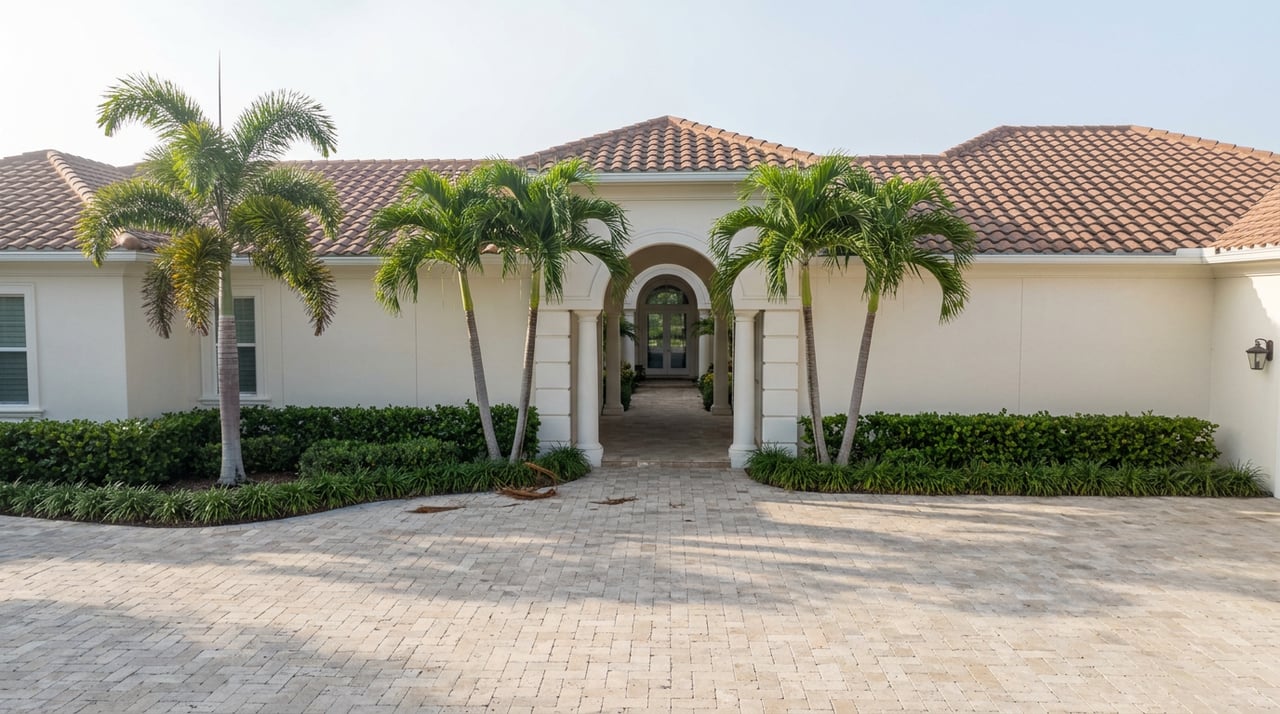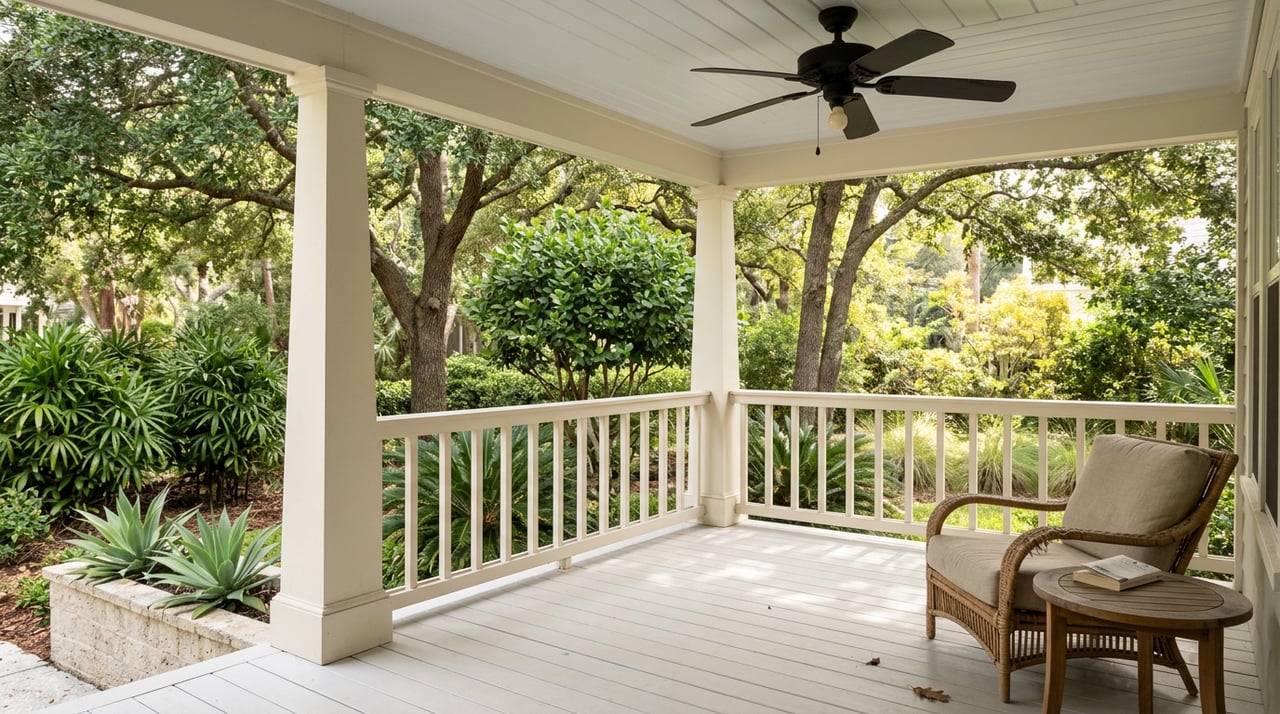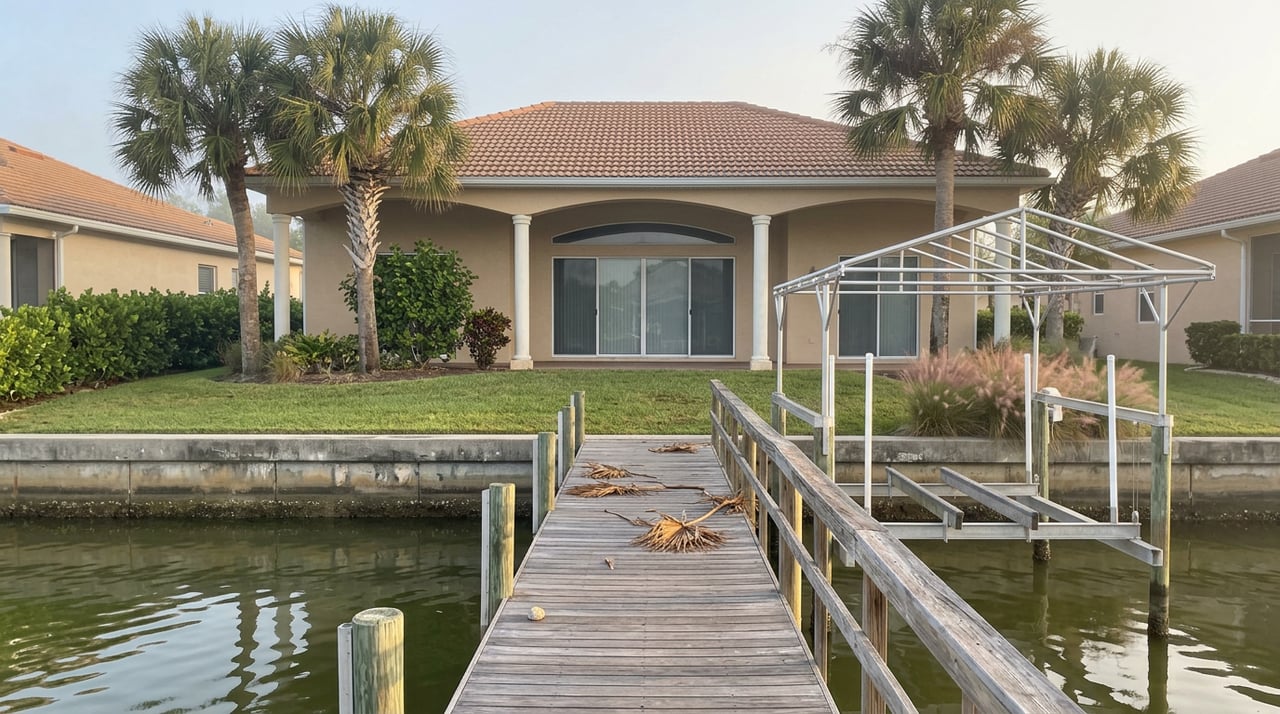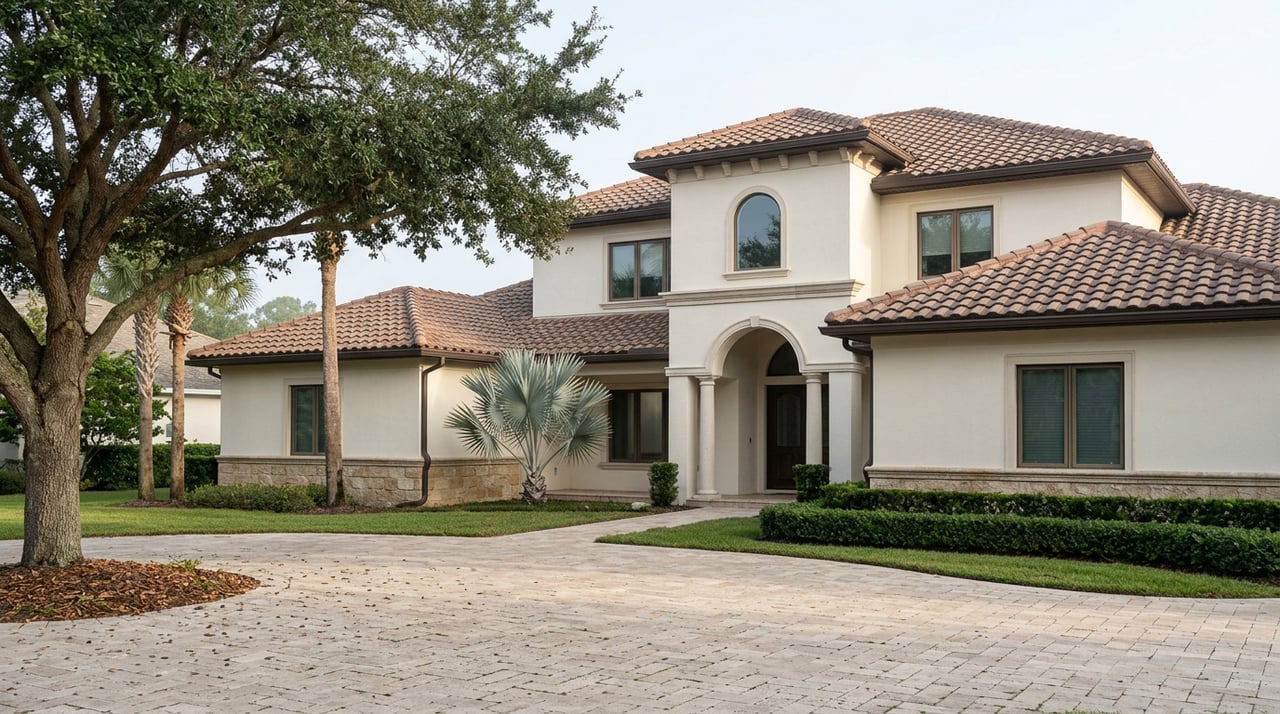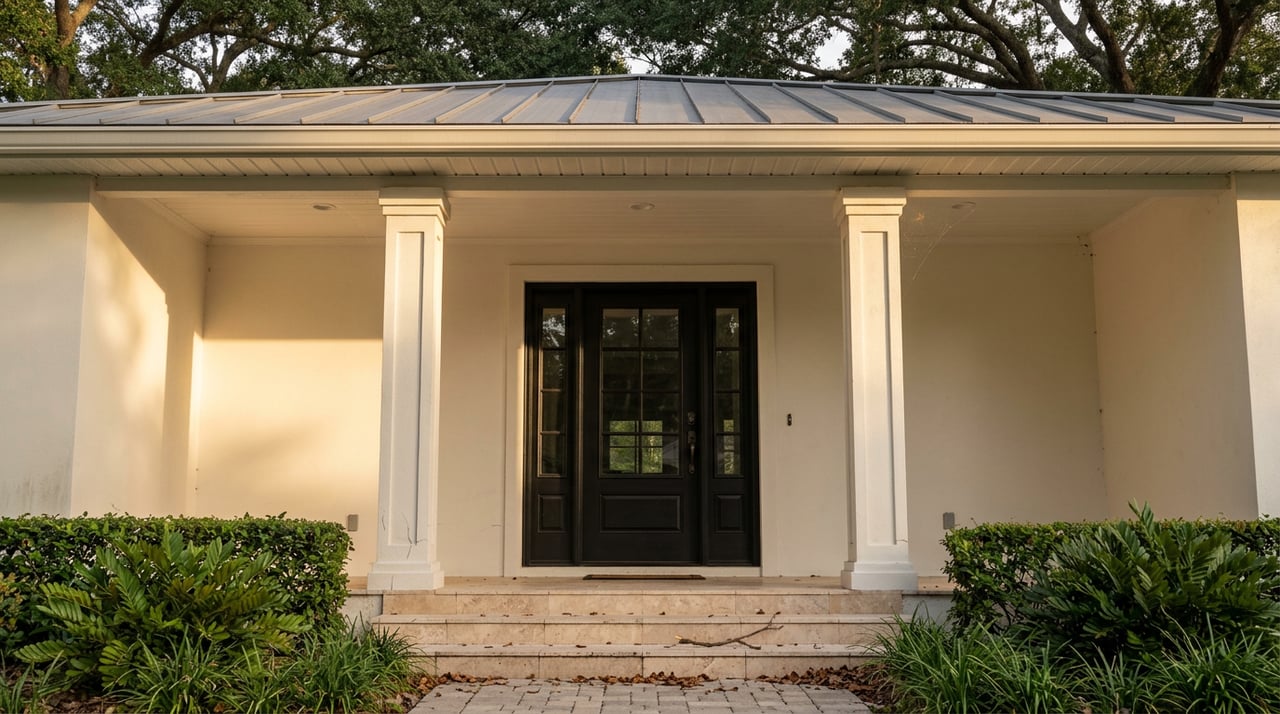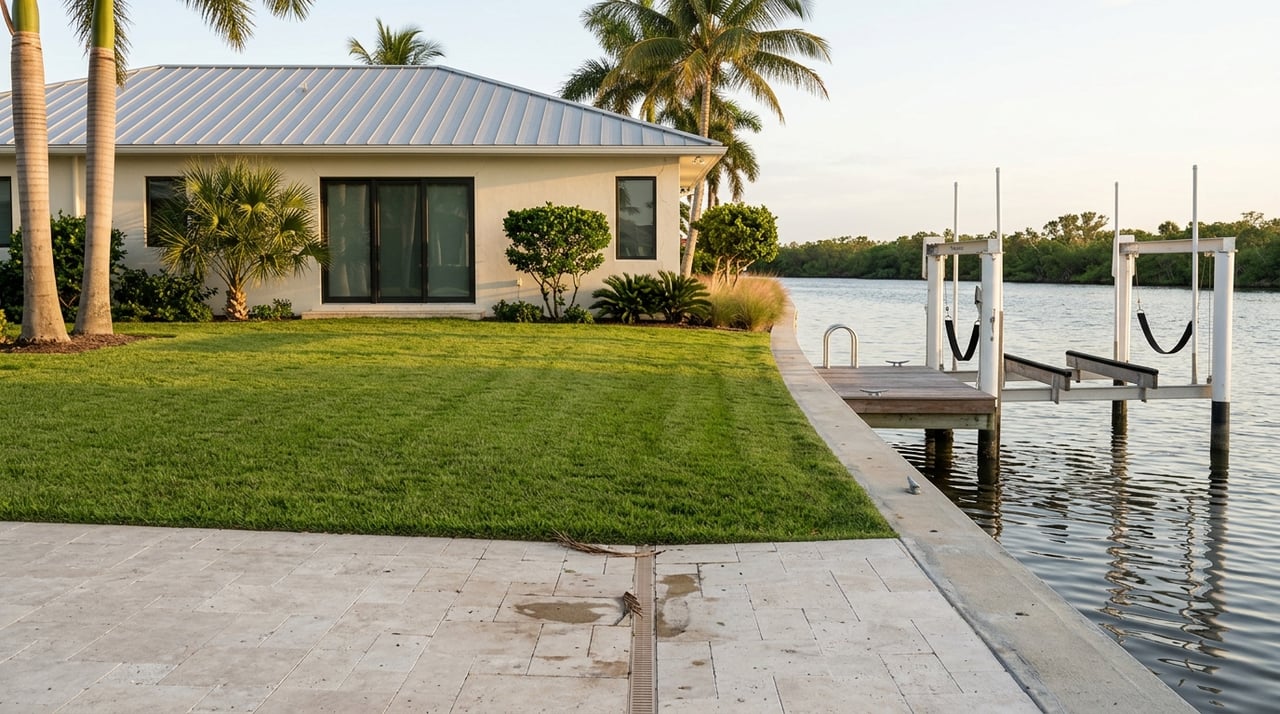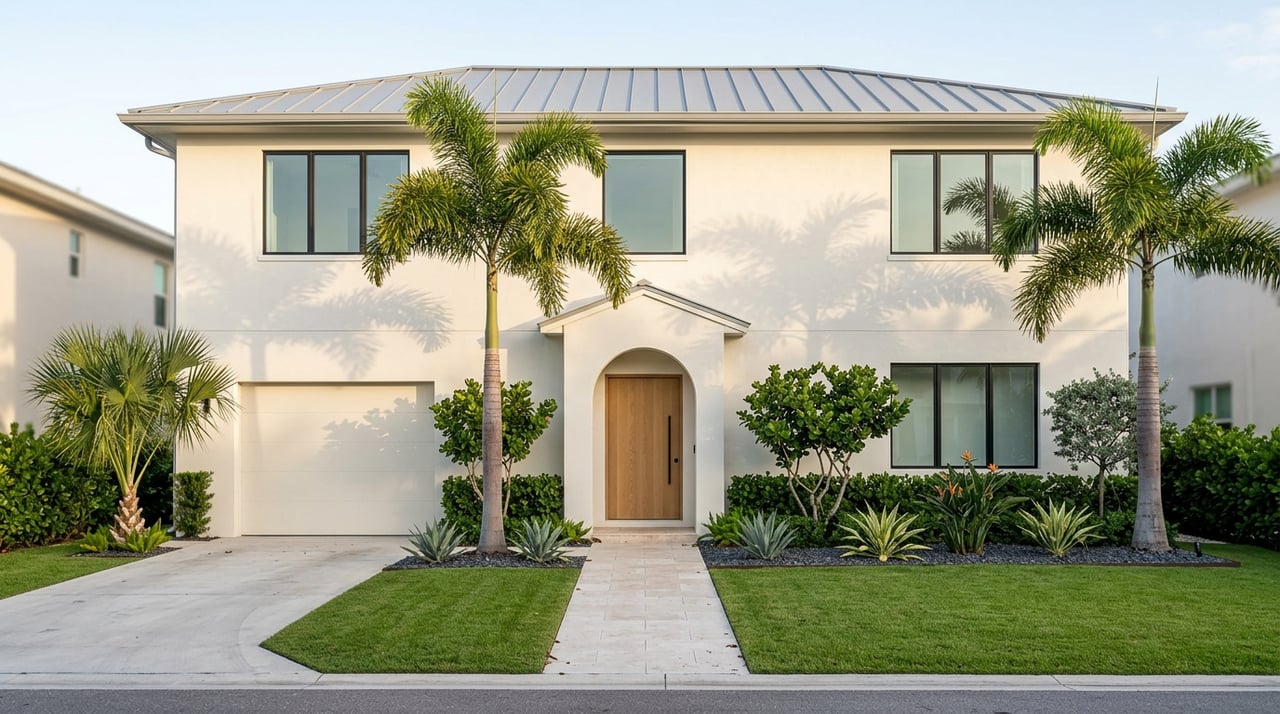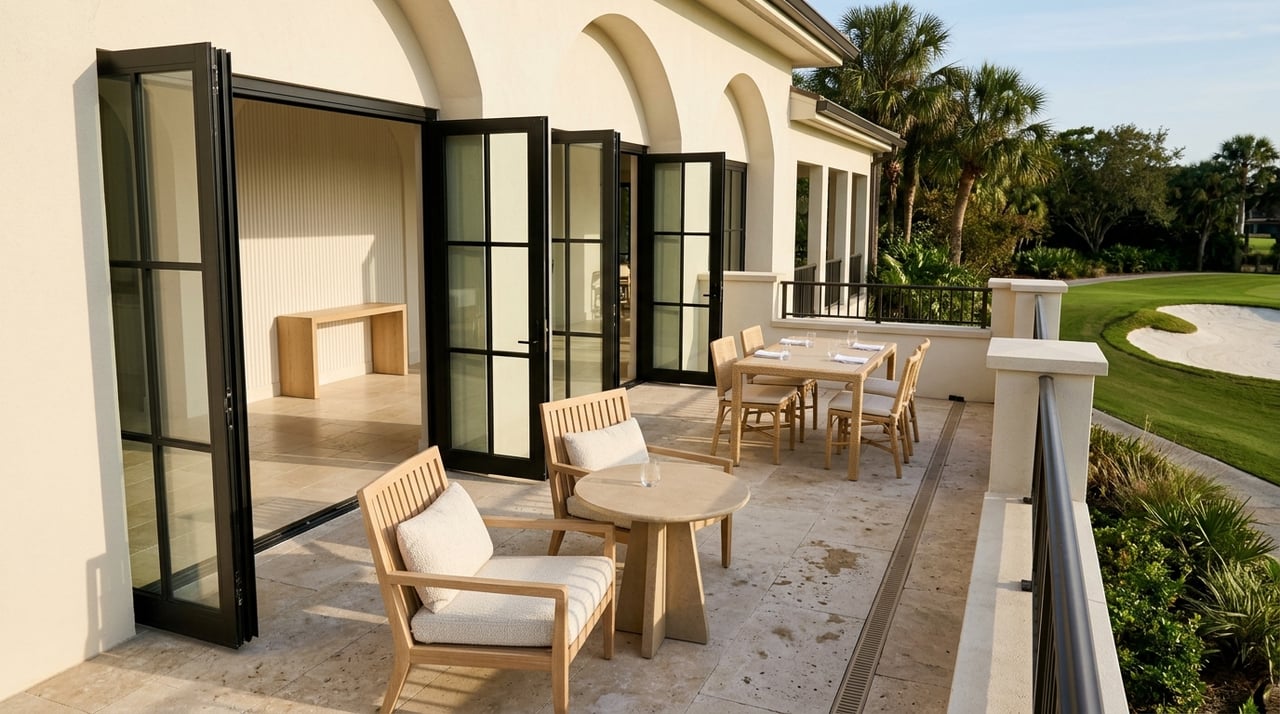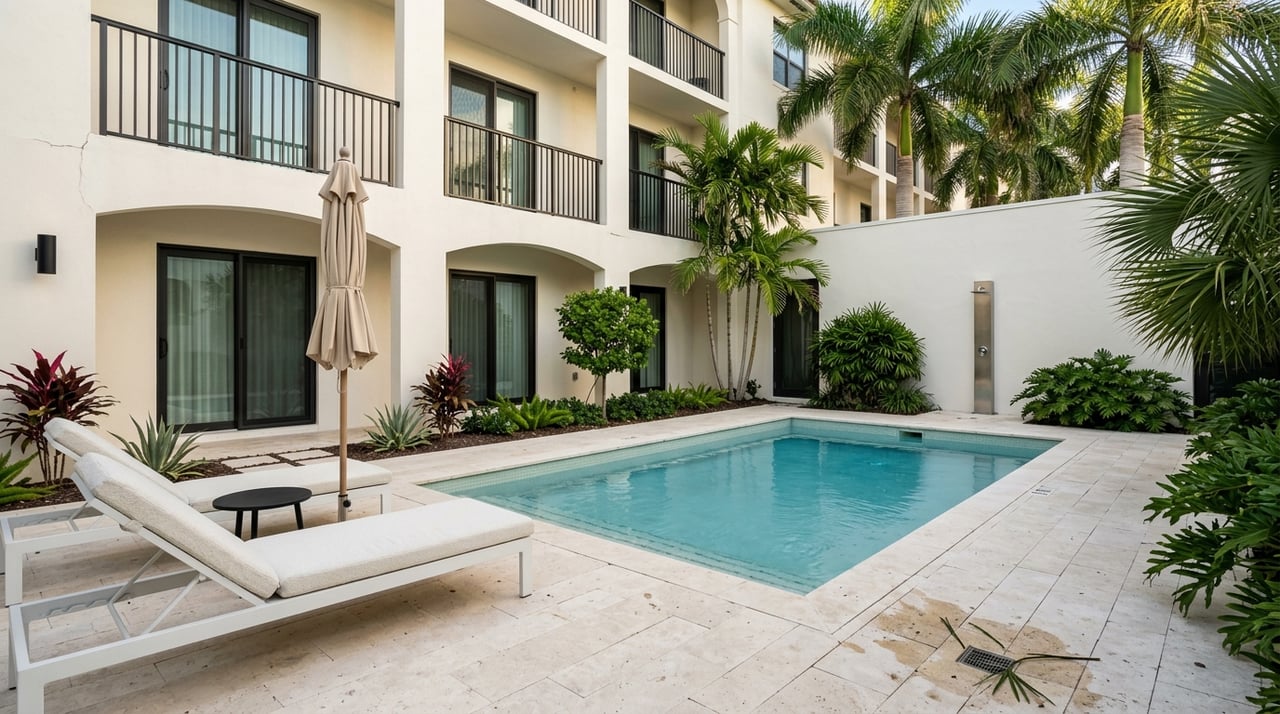
A buyer comparing two Vero Beach houses on a listing app sees one sticker: the list price. The underwriter sees a second one, and it can move the monthly cost of ownership by more than the mortgage rate does. In this market, learning to read that second sticker is what separates a clean offer from a closing surprise.
The July 2026 read on Vero Beach shows 198 active listings against 70 pending sales, a pending-to-active ratio near 0.35, with a trailing six-month median sold price of $368,000 and a median asking price of $445,950. That gap between asking and closing is the negotiation room the market is currently allowing. Insurance is where a well-prepared buyer spends it.
The Same $600,000, Two Different Bills
The Zillow Home Value Index for the barrier-island ZIP 32963 sits around $1.03 million, while mainland 32967 sits near $405,000, 32968 near $422,000, and 32966 near $331,000. Buyers who cross the Merrill P. Barber or 17th Street bridges see the value gap. What they often miss is that carriers repeat the same gesture inside their own pricing.
Local reporting cited by Professional Insurance Advisors gives the clearest picture of that repeat. A beachside home in ZIP 32963 built in 1970 was quoted at $8,200 per year, while a similar $820,000 mainland home in 32967 built in 2020 was quoted at $3,200. A $1.4 million beach home in 32963 came back at $15,000 annually; a $900,000 mainland home in 32967 came back at $2,600. Same county, same MLS, same buyer profile. Different addresses, different roofs, different files.
Placed on a comparison line, it looks like this:
| Location profile | Reported annual homeowners quote |
|---|---|
| 32963 beachside, built 1970 | $8,200 |
| 32967 mainland, $820K, built 2020 | $3,200 |
| 32963 beach, $1.4M | $15,000 |
| 32967 mainland, $900K | $2,600 |
For context, Insurance.com's 2026 state averages put Florida at $7,136 per year on $300,000 of dwelling coverage, and Bankrate's 2026 analysis lists Vero Beach at $8,100 annually on a $300,000 policy against Sebastian at $7,589 and Cocoa at $4,367. The Vero premium over its neighbors is real, but the interior spread across Vero's own ZIPs is larger than the spread between Vero and towns an hour up A1A.
A single carrier does not close that gap by shopping. One local rate guide showed an average annual Vero Beach premium of $2,796 with individual carriers averaging $2,028, $5,688, and $6,279 on comparable homes. The dispersion is the market. The house pulls a carrier out of that stack; the file decides where inside the stack it lands.
What Is Actually in the File
Roof age and roof type. Roof shape. Roof deck attachment. Roof-to-wall connection. Opening protection, meaning impact-rated glass or documented shutters on every opening including the garage door. Secondary water resistance under the roof covering. Distance to open water. Year built and construction type. Four-point inspection status. Wind-mitigation inspection status.
That last line is the one buyers control. A Florida wind-mitigation inspection records the home's protective features in the format carriers use to apply credits, and the report is typically certified for five years. Homeowners who never file one often overpay by $1,200 to $3,000 a year on premiums they could have reduced without changing a single shingle. HomeTeam of Vero Beach and other local firms perform the inspection, and the credit points map directly to line items on a Florida homeowners quote.
Two practical translations for a buyer:
- If the seller has a current wind-mitigation report, ask for it during due diligence and forward it to your agent's insurance contact before you order a bind quote. The first quote sets the anchor.
- If the seller does not have one, a certified inspector can produce the report inside a standard inspection window. On an older mainland home with a newer roof, the credit swing between a documented and an undocumented file is often the single largest lever between contract and closing.
The Wind and Water Split Nobody Explains at Signing
Standard Florida HO-3 policies exclude flood damage from rising water, storm surge, or tidal overflow. Wind that opens the envelope of the house and lets rain in is a wind claim. Rising water that pushes under the door from outside is a flood claim, and only an NFIP or private flood policy responds to it. In a named storm, both can happen inside the same afternoon. Two causes of loss, two policies, two deductibles, two adjusters.
Over 25 percent of NFIP claims come from properties outside the highest-risk FEMA zones. On a Vero Beach purchase, that fact reshapes the flood question from "is it required" to "is it worth the difference." Lenders only require flood coverage inside designated high-risk zones, but canal-adjacent lots off the mainland grid, low-lying sections closer to the Indian River Lagoon, and older barrier-island homes below current base flood elevations carry exposure the mortgage requirement will not catch.
A buyer who wants to see the underlying maps can pull the parcel through the Indian River County property appraiser and cross-check the flood zone against a current elevation certificate. Two homes on the same street can carry different flood ratings if one has been elevated post-construction and the other has not.
Reading the March 2026 Numbers Through This Lens
Houzeo's March 2026 read on Vero Beach showed a sale-to-list ratio of 95.24 percent and 83.64 percent of listings taking a price reduction before closing, against 64.35 percent a year earlier. Inventory sat at 1.31 months of supply. That is not a distressed market. It is a market where sellers have to price into the second sticker whether they name it or not.
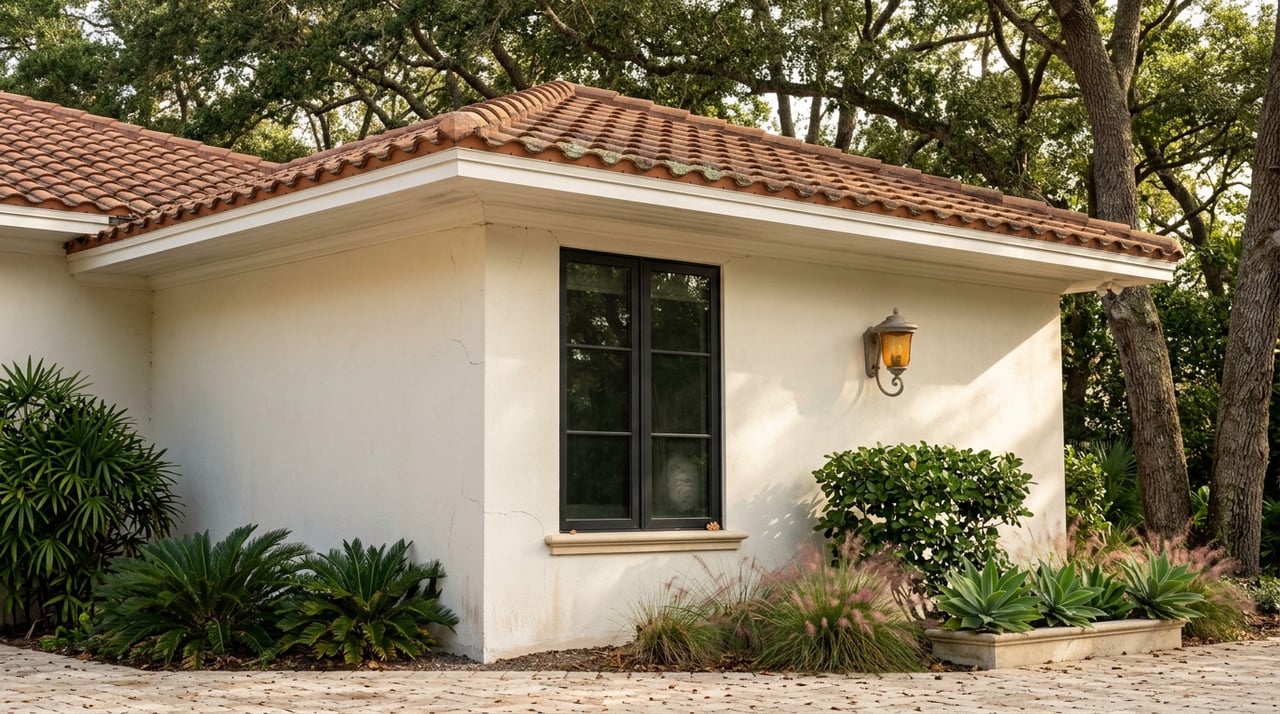
For a mid-market Vero buyer, the question stops being "what is this house worth" and becomes "what is the delta between the roof I am inheriting and the roof the underwriter would have preferred." A 2004 barrel-tile roof with no mitigation paperwork and a 2018 shingle roof with a documented sealed deck, straps, and impact openings can list within twenty thousand dollars of each other and finance at a five thousand dollar annual carrier gap. Over a seven-year hold, that gap is a kitchen.
The Move Between Offer and Closing
Three items belong on the buyer's punch list before the inspection period ends:
- Ask the listing agent for the current wind-mitigation report, four-point inspection, and roof permit history. If the seller has documentation, use it. If they do not, order the inspection inside your window.
- Send the address, roof age, roof shape, opening protection, and any elevation certificate to at least three carrier appetites before you commit to a lender rate lock. In a market where one carrier averages $2,028 and another $6,279 on comparable homes, single-quote shopping is a decision to overpay.
- Decide flood coverage on exposure, not on lender requirements. If the parcel sits east of Indian River Boulevard, along a finger canal, or on the barrier island, the NFIP quote is a cheap phone call.
The buyers who fare best in a Vero Beach transaction are usually the ones who treat the insurance file as part of the offer, not as paperwork that arrives three days before closing. The seller does not control the roof anymore. The carrier does.
Two Questions Worth Answering
Does a wind-mitigation inspection expire? The report is typically valid for five years in Florida. If a seller hands over a report from 2021, the credits it documents likely still apply, but a new inspection may pick up additional credits on a home that has since had impact windows or a roof replacement.
If I am buying on the barrier island, is Citizens my only realistic option? Not automatically. Citizens carries a large share of high-exposure Florida risks, but private carriers still write on 32963 addresses with documented mitigation, newer roofs, and elevation. The point of shopping through an independent agent is to find which of them is currently in appetite for your specific file.
The list price tells a buyer what the seller wants. The insurance file tells them what the house will actually cost. Both belong on the same page before signing anything. For a walk-through of what your specific Vero Beach address is likely to carry, and how to structure an offer around it, reach out to Danielle M. Reidy for a free market analysis.